
How We Build Learning Around What Kids Love
You’ve probably heard your child come home talking nonstop about something they’re obsessed with right now - dinosaurs, trucks, kitties, space - you name it. But these interests are more than just cute little phases; they’re starting points for how we plan our days at Jelly Bean Junction.
You see, when we build experiences around what kids care about (and what they are developmentally ready to try next), learning becomes deeper, more meaningful, and a lot more fun.
What does “planning around interests and skills” actually mean?
In early childhood, children learn best through active, hands-on experiences that connect to their lives. That’s why our teachers spend so much time observing. Watching what materials children choose, listening to the topics they talk about, and noticing the skills they’re practicing during play.
Then, we use those observations to shape the classroom environment, daily activities, and small-group experiences. In other words, we don’t just decide what children will learn and hand it to them. We watch, listen, and then build learning experiences that connect to what they already love and what they’re ready to practice next.
This approach is sometimes called “child-led” or “interest-based” learning.
“Child-led learning isn’t about letting kids do whatever they want all day,” explained Dianna Moore, Area Manager at Jelly Bean Junction. “It’s about giving them some structure while still letting their interests and curiosity guide where the day takes them.”
How Child-Led Learning Impacts Young Children
From a parent’s perspective, an initial impression of our daily schedule might look like snack time, story time, playground adventures, and art projects headed home for the fridge. But beneath all that fun, children are learning in meaningful ways — especially when those experiences connect to their interests and growing skills.
Here’s why that matters:
They stay more engaged It might seem obvious, but children spend longer on activities that connect to their interests. That extra time means more chances to practice focus, problem-solving, language, and social skills.
For example, a preschooler fascinated by babies might carefully feed, rock, and “check the temperature” of classroom dolls, practicing gentle hands and nurturing language. A toddler who loves cars might spend their morning comparing wheel sizes or colors and testing which ones go fastest.
It’s these types of extended, self-led experiences that give kids the repetition needed to help master skills.
They feel capable and confident
When activities match what children are developmentally ready for, you’ll hear more of “I did it!” and less of “This is too hard”.
In our classrooms, our teachers make a point to notice where each child is — whether they’re working on holding scissors correctly, taking turns in a game, or writing the first letter of their name — and then offer materials and invitations that gently stretch those skills without overwhelming them.
That growing sense of competence is what helps children take on new challenges with confidence.
They learn more deeply
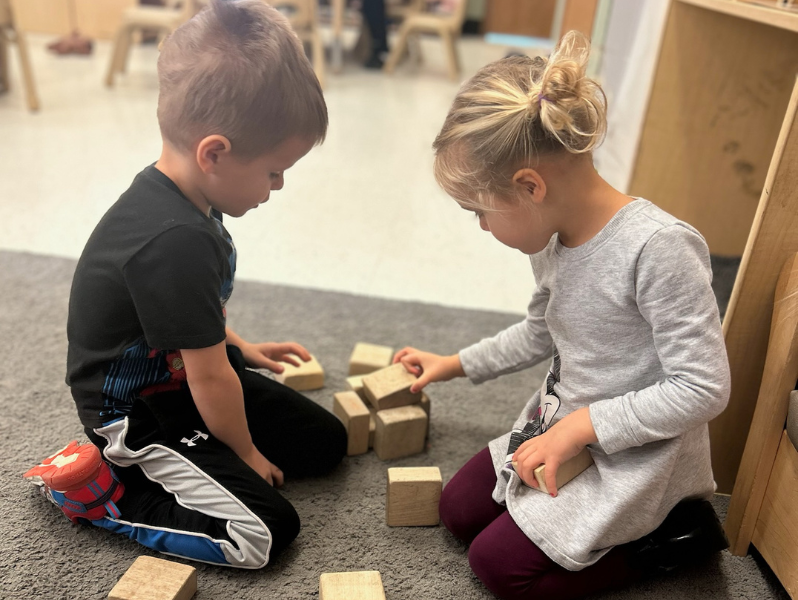
A simple interest can grow into rich learning across multiple areas. For example, a classroom obsession with bridges might lead to:
Reading books about different kinds of bridges;
Comparing which designs hold the most weight;
Learning new vocabulary like “support,” “balance,” and “structure”; or
Working together to solve problems when a bridge collapses.
What started as “I like going over bridges” becomes math, science, language, and social learning — all because children are motivated to dig deeper into something they care about.
Most importantly...they learn to love learning!
When children see that their questions and ideas actually shape the day, they learn that their interests matter. That their ideas are worth exploring. And that learning isn’t something that only happens when an adult tells them what to do...it’s something they actively take part in.
And isn’t that the whole point? As parents, we want our children to feel excited about learning. We want them to ask questions, try new things, and walk into each day curious about what might happen next.
Helping kids shift into that mindset of “I want to know more” is one of the greatest gifts we can give children as they move toward kindergarten and beyond.
What Child-Led Learning Looks Like at Jelly Bean Junction
If you're wondering what child led or interest-led learning looks like in our classrooms, here’s a real-life example:
Say there’s a bird building a nest just outside the classroom window. A child might notice the bird carrying twigs, calling over classmates to come see. That might turn into a small group gathered at the window every day, watching, pointing, and asking questions like “Where is she going?” “Is she building a house?” “Will there be babies?”
Our teachers don’t just notice this interest; we play into it and extend it further by:
Adding books and photos about birds, nests, and baby animals to our classrooms.
Introducing new vocabulary like nest, twigs, eggs, hatch, and parent bird.
Providing materials to build their own “nests” with yarn, paper strips, clay, and natural items.
Inviting children to draw what they see, label their pictures, and share their observations with friends.
Along the way, they’re also practicing caring for living things, building patience as they wait to see what happens next, and nurturing a sense of wonder about the world around them.
How Parents Can Support Child-Led Learning at Home
Notice and name their interests. “You’ve been building so many tall towers lately!” or “You’re really interested in how bugs move.” This helps children feel seen and encourages them to share more.
Ask open-ended questions. “What do you think will happen if…?” “How could we try this a different way?” These questions invite thinking, not just answers.
Follow their lead in play. Let them choose the game, the story, or the art project sometimes. Join where they invite you and resist the urge to “fix” or direct everything.
Share what you’re seeing with teachers. If your child is suddenly obsessed with space, sharks, or dressing up as a certain character, let us know! We love weaving those interests into classroom experiences.
When home and school both honor children’s interests and growing skills, those everyday moments become building blocks for confidence, curiosity, and a lifelong love of learning.
The little moments happening today can become skills children carry with them for years to come. And those moments often start with something your child already loves.
At Jelly Bean Junction, early childhood education is about more than preparing children for kindergarten or the next classroom. It’s about creating a warm, nurturing environment where children can build confidence, independence, curiosity, friendships, and a genuine love of learning.
Schedule a tour to see what that looks like across our classrooms.


Comments