
7 Essential Life Skills Children Begin Building in Early Childhood
- Jessie Hoffman
- 2 days ago
- 6 min read
As parents, we all hope our children learn more than just letters and numbers as they grow. We want them to feel brave enough to join a game, tell a teacher when something is wrong, take a deep breath after a disagreement, or try again when a puzzle piece doesn’t fit the right way.
Those everyday moments may seem small, but they’re proof that your child is growing in important ways. Each time children practice working through a challenge, sharing their ideas, or navigating a friendship, they’re building skills that will help them connect with others, solve problems, and believe in themselves.
In Mind in the Making, author and early childhood expert Ellen Galinsky puts language to these important building blocks, identifying seven essential life skills that begin developing in childhood and continue to grow over time.
At Jelly Bean Junction, we see those skills take shape every day, during classroom routines, conversations with teachers, outdoor play, and all the wonderfully ordinary experiences in between.
Maintaining Focus and Self-Control

For young children, focus and self-control aren’t about sitting perfectly still or never getting distracted. They’re about learning, little by little, how to manage big feelings, pay attention, and pause before reacting.
That might look like remembering what comes next in the daily routine, waiting for a turn, listening to a teacher’s directions, or leaving a favorite activity when it’s time to move on.
What it looks like at Jelly Bean Junction: A child may concentrate on finishing a puzzle, wait while a friend has a turn with a favorite toy, follow the steps for washing their hands, or stick with an art project until it feels just right.
These experiences give children opportunity after opportunity to practice the self-regulation skills that support learning, friendships, and a smooth transition to kindergarten.
Understanding How Others Feel

Little humans are still learning something adults often take for granted: another person can think, feel, or want something completely different from them. And that concept can feel particularly tricky to navigate when two kids have their eyes on the same toy.
That said, learning to see things from someone else’s point of view is an important part of social-emotional growth. It’s what helps children develop empathy, work through conflict, and build those sweet, adorable friendships we love to see.
What it looks like at Jelly Bean Junction: When children disagree, our teachers encourage them to press pause and just think about what happened. How is your friend feeling? Why might they be upset? What could we try next?
This might not make every playground disagreement disappear overnight, but it certainly gives kids some helpful language and tools they can use during the next one.
Communicating
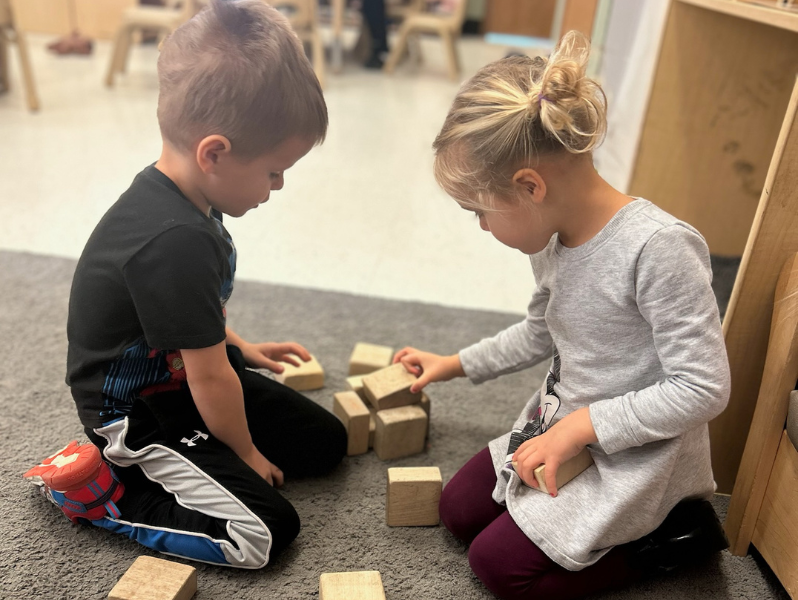
Getting a child to learn to “use their words” doesn’t happen overnight. It takes time and practice, and it starts with us!
Think about it...children are always watching how we communicate, how we ask for help, explain our feelings, listen to one another, and work through a problem. This is what teaches them that words can help them share what they want and need.
In action, it may mean saying, “Can I play?. Telling a friend, “I’m still using that.” Asking a teacher for help. Explaining why they are upset. Or listening long enough to hear what someone else has to say.
What it looks like at Jelly Bean Junction: Our teachers help children find the words they need throughout the day by asking open-ended questions, encouraging back-and-forth conversations, introducing new vocabulary, and creating plenty of opportunities for children to share their thoughts and ideas.
“We want children to see that their words have power,” explained Teri Tarvin, Director of Educational Development and Funding. “They can use them to ask questions, solve problems, express their feelings, and speak up for themselves.”
Making Connections

Children are natural connection-makers. A child may notice that if they drop food on the floor, the dog will vacuum it up. That the leaves outside look like the ones in a favorite book. They might realize a triangle block has three sides, just like another triangle they saw earlier. Or they may discover that ice turns into water.
These discoveries are part of how children begin to make sense of the world around them.
What it looks like at Jelly Bean Junction: Whenever children sort and compare objects, look for patterns, experiment with materials, or revisit familiar ideas in new ways, they're making connections.
Sometimes the result is a very excited, “I KNOW THAT!”
Those little “aha!” moments matter. When children connect new information to something they already know, it deepens their understanding and keeps their curiosity growing.
Critical Thinking

“Why did that happen?” “What if we try it this way?” “Why does my tower keep falling?”
Critical thinking may sound like a big idea for preschoolers, but this is often exactly where it starts.
What it looks like at Jelly Bean Junction: A puzzle piece won’t fit, so a child turns it around. A block tower keeps falling, so they try making the bottom wider. During an experiment, children make a prediction and then watch to see what happens.
Teachers don’t always need to rush in with the answer, either. Sometimes the most helpful response is another question: “What do you think we could try?”
That gives children room to observe, experiment, test ideas, and learn that there may be more than one way to solve a problem.
Taking on Challenges

Sometimes the day’s biggest challenge is learning a new skill. Other times, it is a zipper that simply refuses to cooperate.
Learning to take on challenges doesn't mean children stop feeling frustrated. It means they begin to understand that frustration doesn’t have to be the end of the story. They can ask for help, try another way, make a mistake, take a break, and try again.
What it looks like at Jelly Bean Junction: Children practice this whenever they attempt something new, join a game, work through a tricky classroom activity, practice writing a letter, or rebuild something that didn’t work the first time.
A caring teacher is nearby to offer encouragement without taking over. That’s what helps turn “I can’t do it” to “Can you help me try?” and eventually, “I did it!”
That growing confidence and perseverance can make a meaningful difference as children move into their next classroom and beyond.
Self-Directed, Engaged Learning
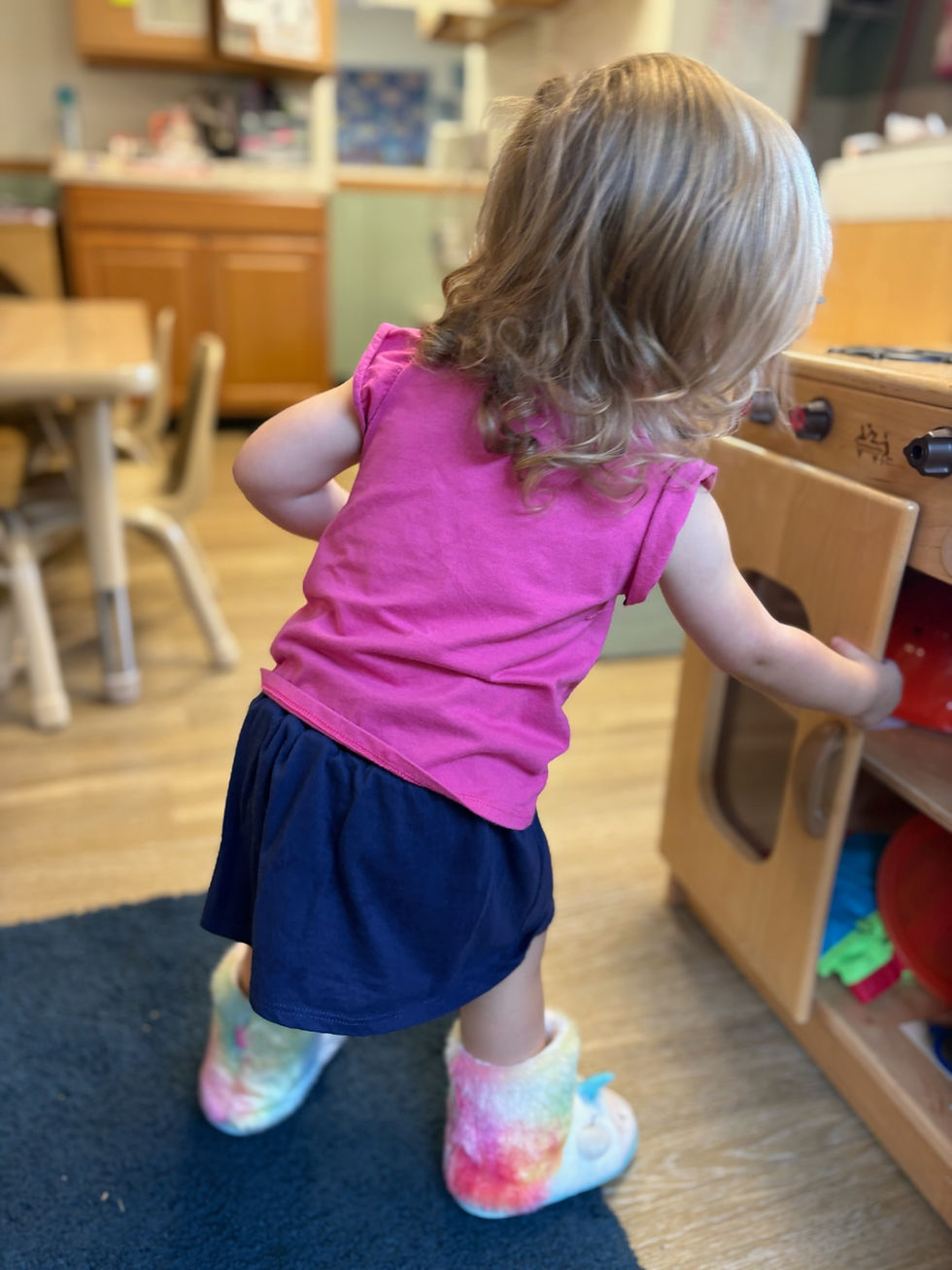
Children ask a lot of questions - and that might be the understatement of the year.
“Where does the sun go when it sets?” “Can I make this tower one block taller?” “What happens if I mix blue and yellow paint?”
But asking questions is also a sign of curiosity, and curiosity is what drives engaged, independent learning. When children have opportunities to explore their interests, make choices, test ideas, and ask questions, learning becomes something they actively take part in.
What it looks like at Jelly Bean Junction: An interest in bugs might grow into a classroom investigation. Building with blocks can become an experiment in balance. Pretend play may turn into a restaurant, veterinarian’s office, or grocery store, complete with roles, rules, and plenty of collaboration between friends.
At Jelly Bean Junction, teachers provide a thoughtful framework for learning while leaving room for children’s interests and questions to shape the day. After all, some of the best learning begins with a child saying, “I wonder what happens if…”
Why These Skills Matter
From the outside, a day at daycare may look like snack time, story time, playground adventures, and art projects headed home for the fridge. But beneath all that fun, children are learning in meaningful ways.
A child waiting for a turn is practicing self-control.
Two friends figuring out how to play together are building communication and empathy.
A child rebuilding a tower is practicing perseverance and problem-solving.
A child asking their 47th “why?” of the morning is learning that the world is worth exploring.
These skills don’t show up all at once, and there isn't a point where a child simply checks them off and moves on. They grow through hundreds of small, repeated experiences with caring adults nearby to guide, encourage, ask questions, and help children try again.
Early childhood education at Jelly Bean Junction is about more than preparing children for kindergarten or the next classroom. It's about creating a warm, nurturing environment where children can build confidence, independence, curiosity, friendships, and a genuine love of learning. Because the little moments happening today can become skills children carry with them for years to come.
What Jelly Bean Parents Are Saying
“My son has learned so many new skills because of the programming and exposure to new things.” - Michelle F., Jelly Bean Junction Parent
“My child has learned so much in the preschool room, I feel confident that he is being well prepared for his transition to kindergarten.” - Lindsey P., Jelly Bean Junction Parent


Comments