
At-Home Prewriting Practice Activities

Children don’t magically learn to walk overnight. Before those first steps happen, they spend months building strength, balance, coordination, and control in the muscles they’ll need to move confidently. Handwriting development follows a very similar path.
Before children can properly hold and control a pencil, they first need to strengthen the small muscles in their hands, wrists, and fingers. That’s where fine motor development and prewriting practice come in.
How Fine Motor Development Supports Writing Skills
Fine motor skills help children develop the control needed for precise movements, such as gripping a crayon, tracing lines, making marks on paper, and eventually forming letters. These skills also support hand-eye coordination, which helps children copy shapes, lines, and eventually letters more accurately.
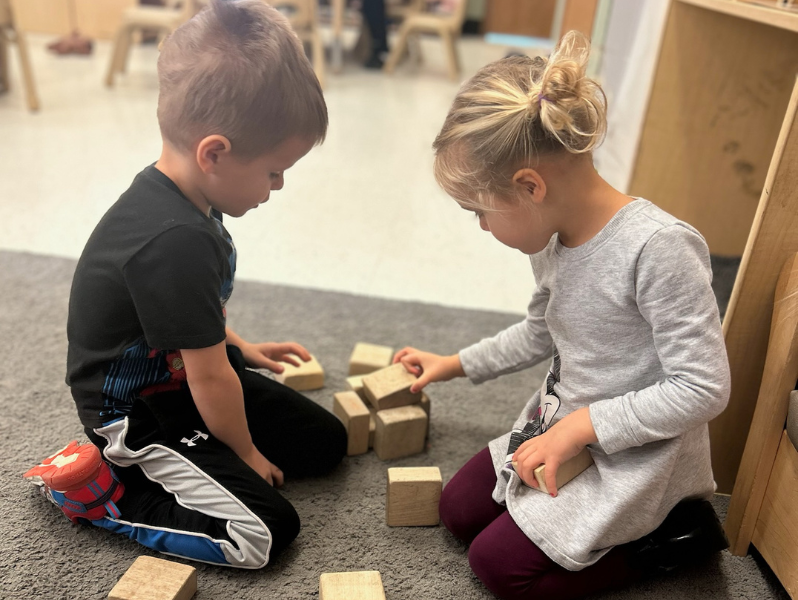
Activities like stacking, squeezing, tracing, cutting, and sensory play all help strengthen these foundational skills. And the best part is, you can do many of these activities right from your home!
1. Play-dough “snakes” and letters
Have kids roll play-dough into thick “snakes,” then bend and join them to make letters, shapes, or simple pictures. Pinching, rolling, and shaping build finger strength and control, while following letter models helps with hand–eye coordination and early letter formation.
2. Line and shape tracing
Draw simple lines (straight, zigzag, curved) and basic shapes on paper and invite children to trace them with crayons, markers, or even their fingers. Switching tools and using different colors keeps it playful while tightening pencil control and spatial awareness.
3. Bead threading
String large beads, cereal, or pom‑poms onto yarn or pipe cleaners. These activities build the pincer and tripod grips that are essential for holding a pencil comfortably.
4. Sensory writing trays (sand, salt, or shaving cream)
Fill a shallow tray with sand, salt, or a thin layer of shaving cream and let kids “write” or draw lines and shapes with their fingers, a stick, or a blunt crayon. Sensory feedback makes the practice feel like playing, while building wrist stability and control.
5. Stickers, stamps, and peel‑and‑place games
Ask kids to peel stickers carefully, place them on a target, or press stamps onto paper. These small, precise movements mimic the pressure and control needed for pre‑writing and help build finger strength without any “seatwork” feeling.
6. Simple cutting and snipping
Give children child safe scissors and have them cut along straight lines, then gently progress to zigzags and curves on paper. Cutting builds hand strength, bilateral coordination (both hands working together), and helps prevent early writing fatigue.
Setting the Stage for School Success with Prewriting Practice
We use purposeful prewriting practice in our daily curriculum at Jelly Bean Junction to support your child’s kindergarten readiness. From building fine motor strength to exploring lines, shapes, and early marks, our activities help little hands gain the control, confidence, and coordination they need before they ever sit down to write a full letter.
Schedule a tour today to learn more about how we help your little one develop the skills they need to thrive in kindergarten and beyond.


Comments