
A Spotlight on Strengthening Language Development

Watching your child learn to talk is full of little “wow” moments. One day it’s coos and babbles, the next it’s “mama” or “dada,” and before long, you’re hearing full stories (and plenty of questions) all throughout the day.
What makes it even more special is how naturally it all comes together. Language skills grow over time through everyday moments, simple conversations, and lots of back-and-forth. From infants experimenting with sounds to toddlers naming everything they see to preschoolers asking question after question, each stage plays an important role in building strong communication skills.
Reinforcing Language Skills for Infants, Toddlers, and Preschoolers
As early childhood educators, we understand the important role we play in helping children develop confident communication skills. That’s why we provide our teachers with the tools and training they need to support age-appropriate language from the very beginning.
Infants
Babies are like little sponges, taking in far more from their surroundings than we might expect. In our infant classrooms, we focus on simple, meaningful interactions that begin building communication skills right away.
Responding to coos and sounds with smiles, eye contact, and gentle back-and-forth “conversations”
Mimicking sounds to encourage early interaction and turn-taking
Singing softly during routines like rocking and nap-time to introduce rhythm and language patterns
Using clear, real words throughout the day to help build a strong foundation for speech
Positioning ourselves face-to-face so infants can observe how words are formed
Reading regularly to introduce the sounds and flow of language
Over time, these everyday interactions add up, strengthening both your bond and your child’s early communication skills.
Toddlers
Toddlers are active, curious, and often full of wonder. In our toddler classrooms, we support language development by keeping conversations flowing throughout the day, focusing on things like:
Naming what children see and do to expand vocabulary
Building on early words and short phrases to encourage growth
Responding to single words with fuller phrases (for example, if a child says “car,” we might say, “Yes, a fast blue car!”)
Singing songs and reading often to reinforce language in a fun, engaging way
Using repetition to help new words stick
Giving toddlers time to respond, even when it comes through gestures or takes a moment
Just as importantly, we use positive language that focuses on what children can do, helping build confidence as they learn to express themselves.
Preschoolers
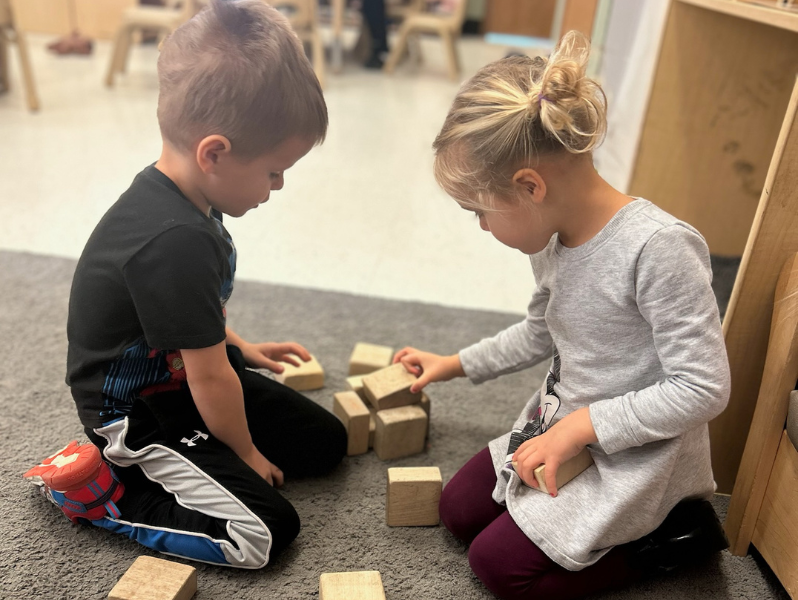
Preschoolers usually have a lot to say, and in our classrooms, we make space for every bit of it. This is when children begin using language to share ideas, ask questions, tell stories, and engage in larger conversations.
We support this growth by:
Encouraging children to share ideas, ask questions, and tell stories during play and group time
Talking through thoughts and experiences to strengthen communication skills
Asking open-ended questions that inspire children to explain, imagine, and think more deeply
Building on children’s stories to keep conversations going
Introducing new vocabulary naturally through books, activities, and daily experiences
Using books as a starting point for conversation and deeper learning
Modeling correct grammar in a natural way rather than interrupting to correct mistakes
Helping children understand how language works in everyday conversations
We Support Communication at Every Age
Across every classroom, our goal is to help children feel heard, supported, and confident as they discover their voice. Language development happens through everyday moments—not big lessons or formal instruction.
At Jelly Bean Junction, that means lots of talking, reading, singing, listening, and giving children the space to practice their words in a warm, responsive environment.


Comments